

by Lea Amodio
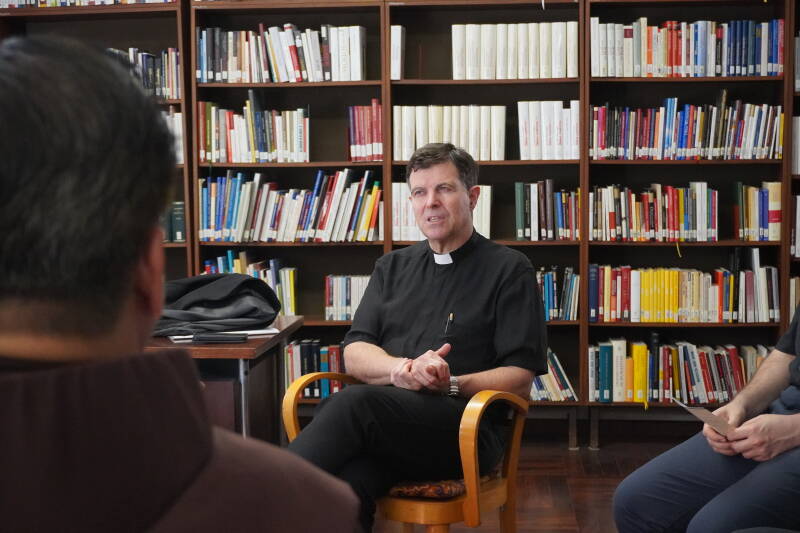
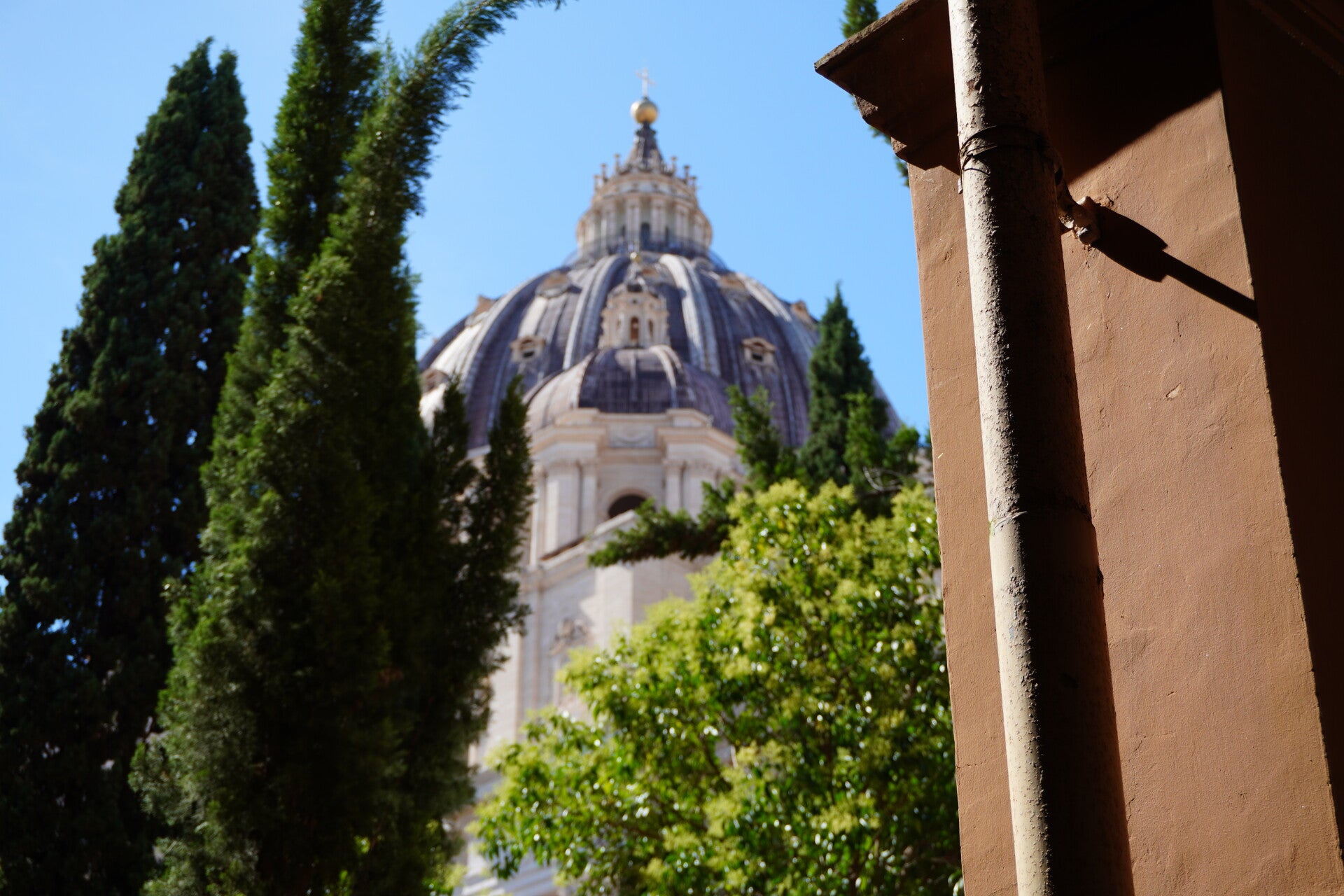
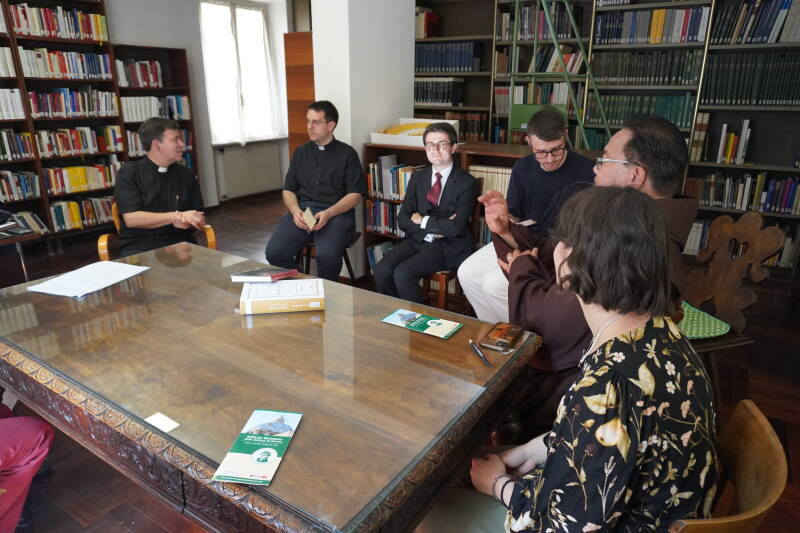
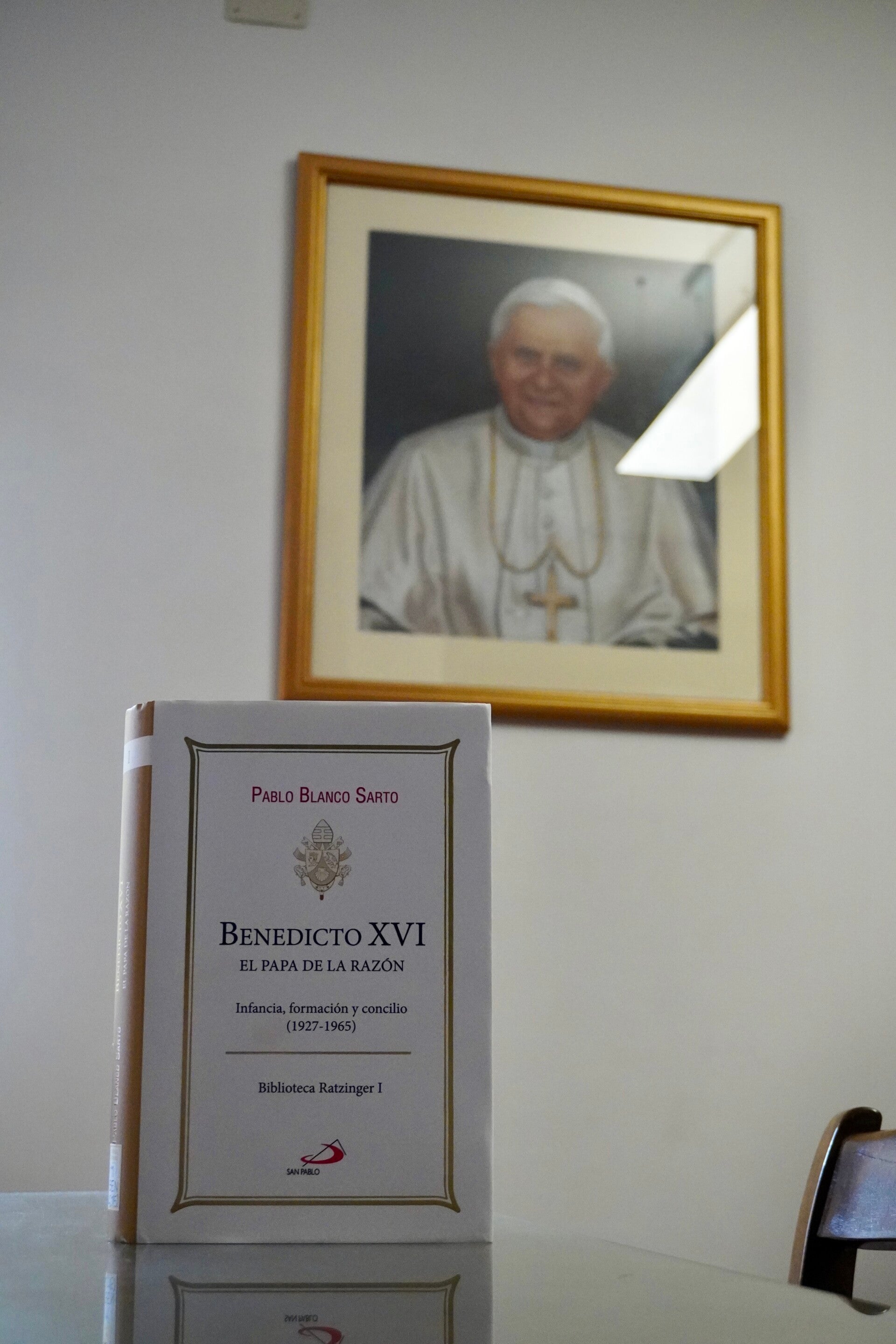
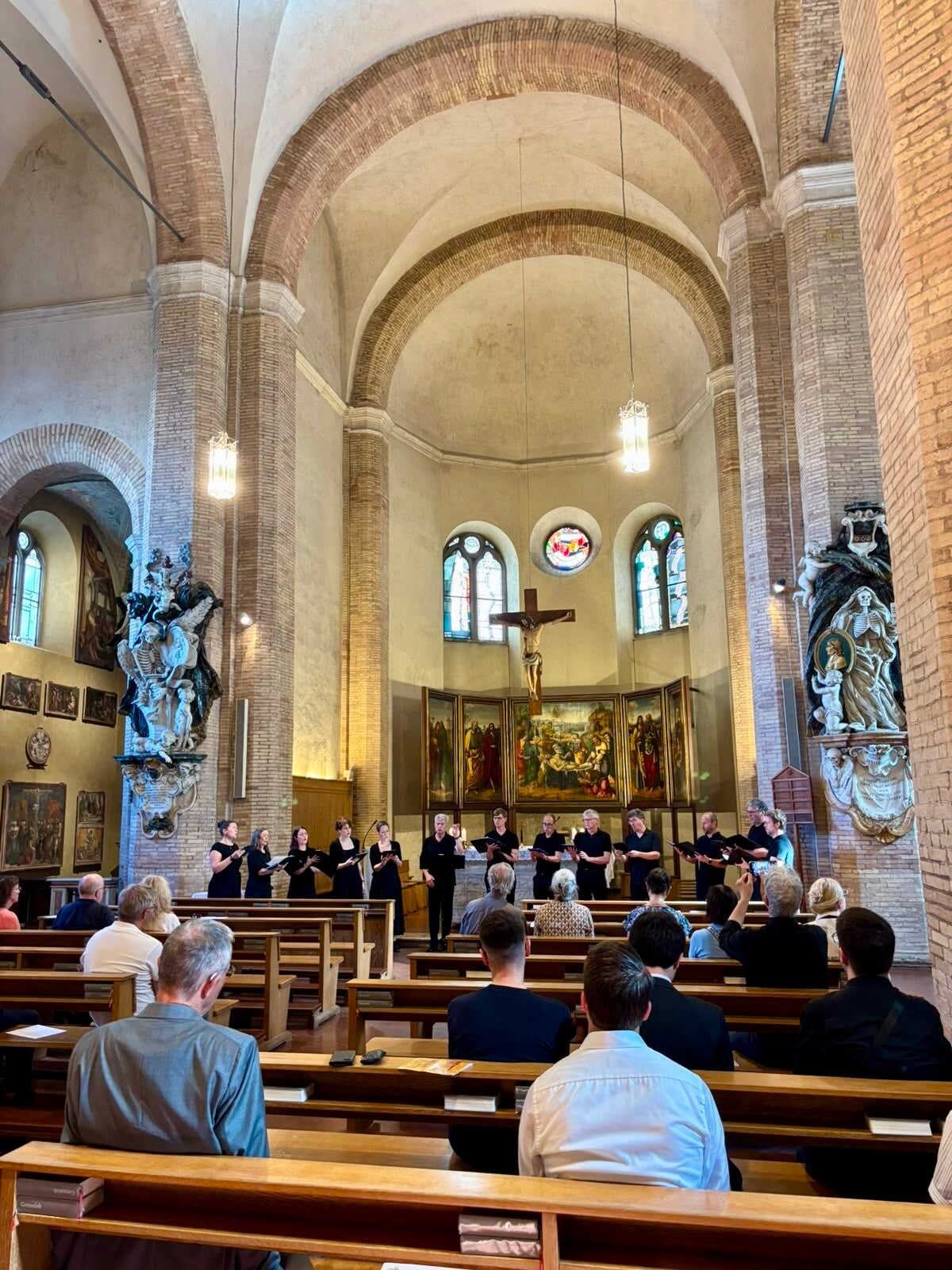
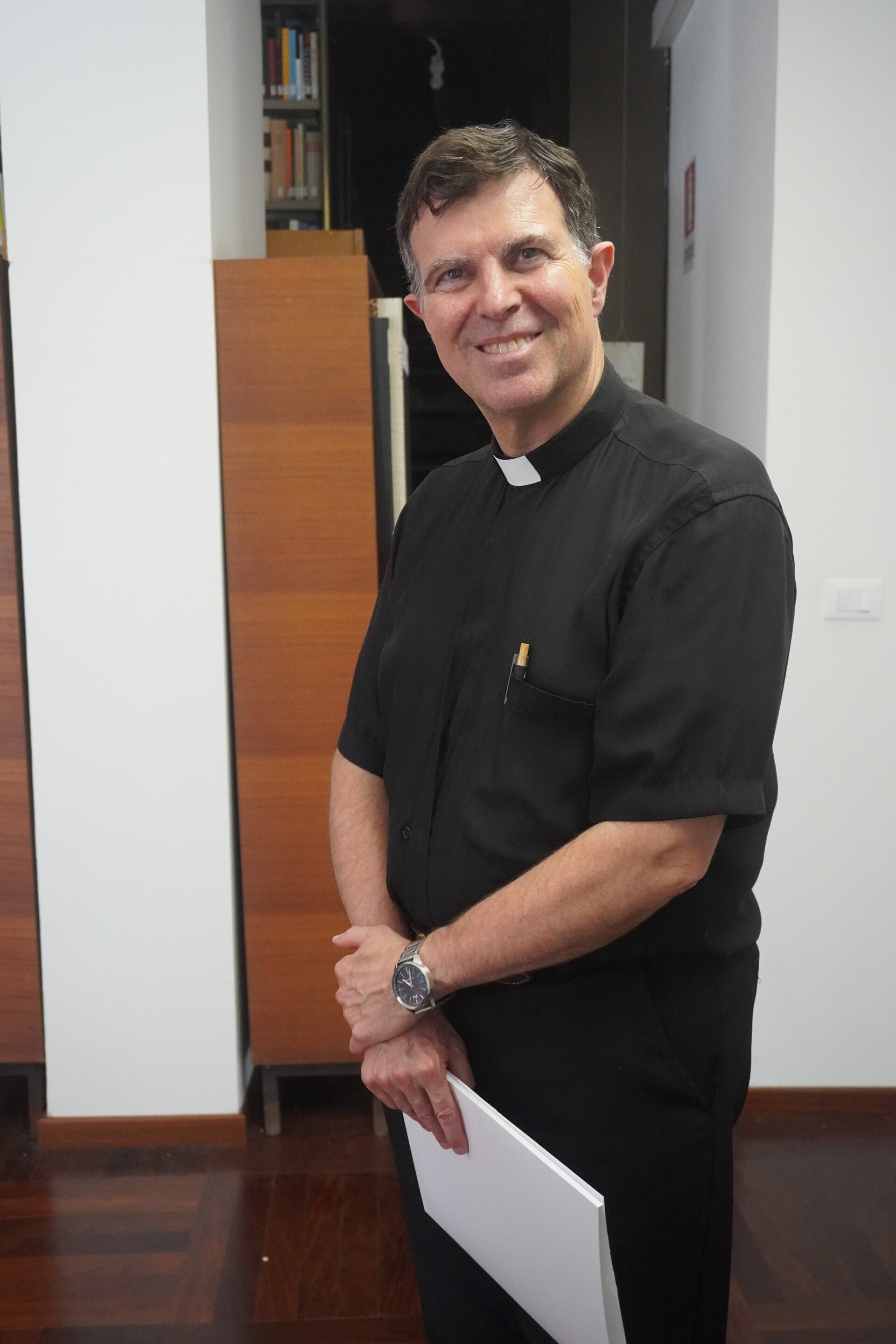
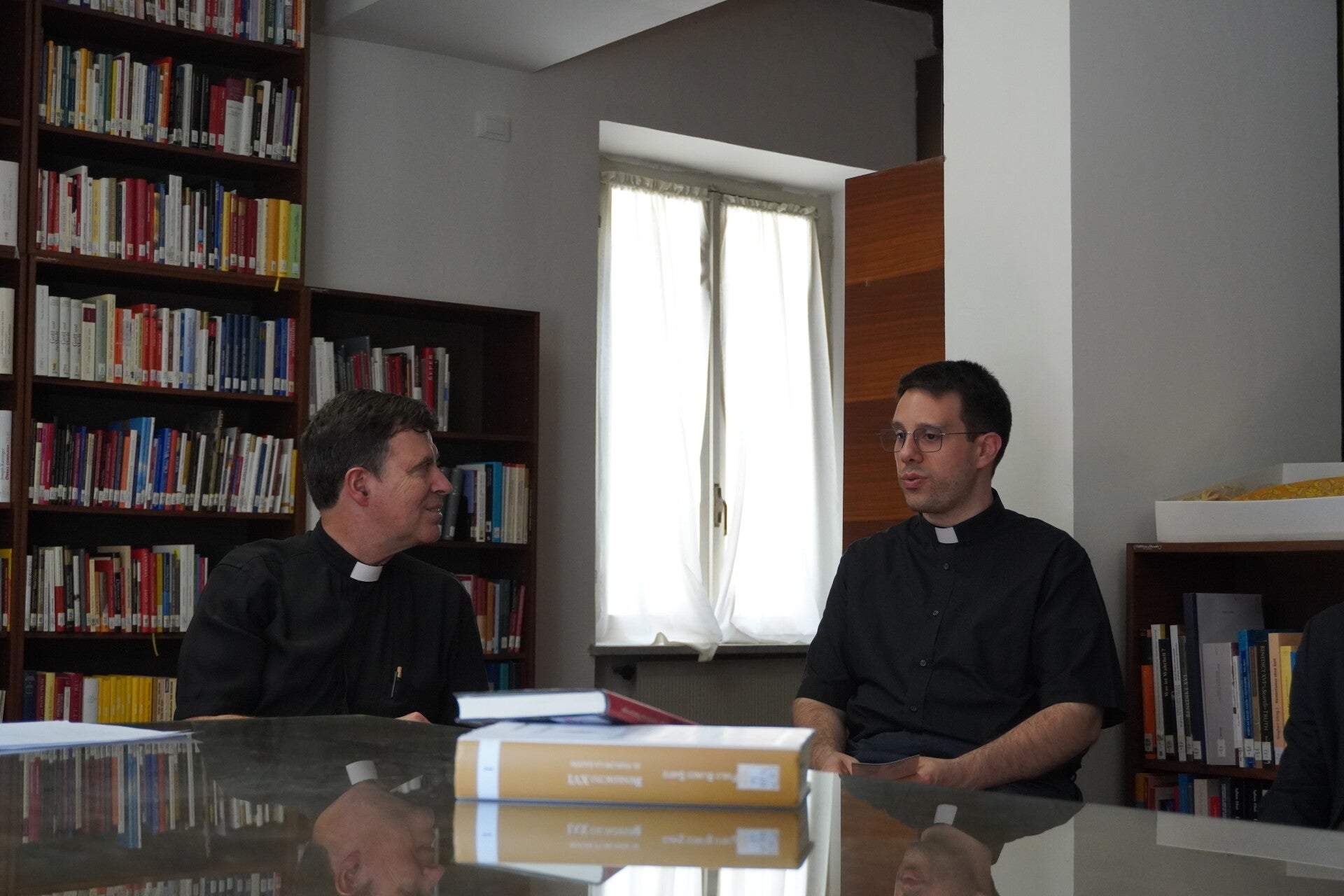
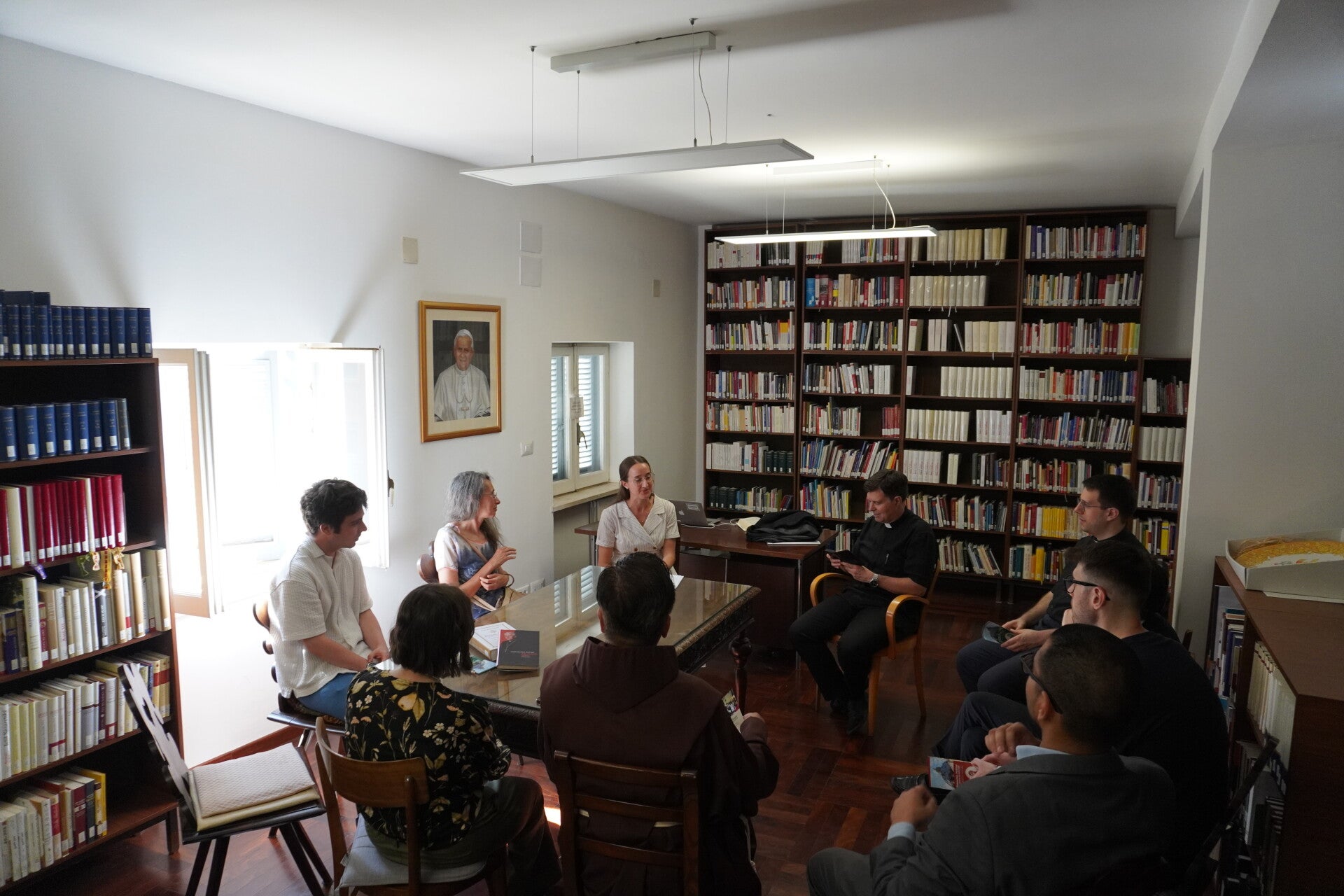
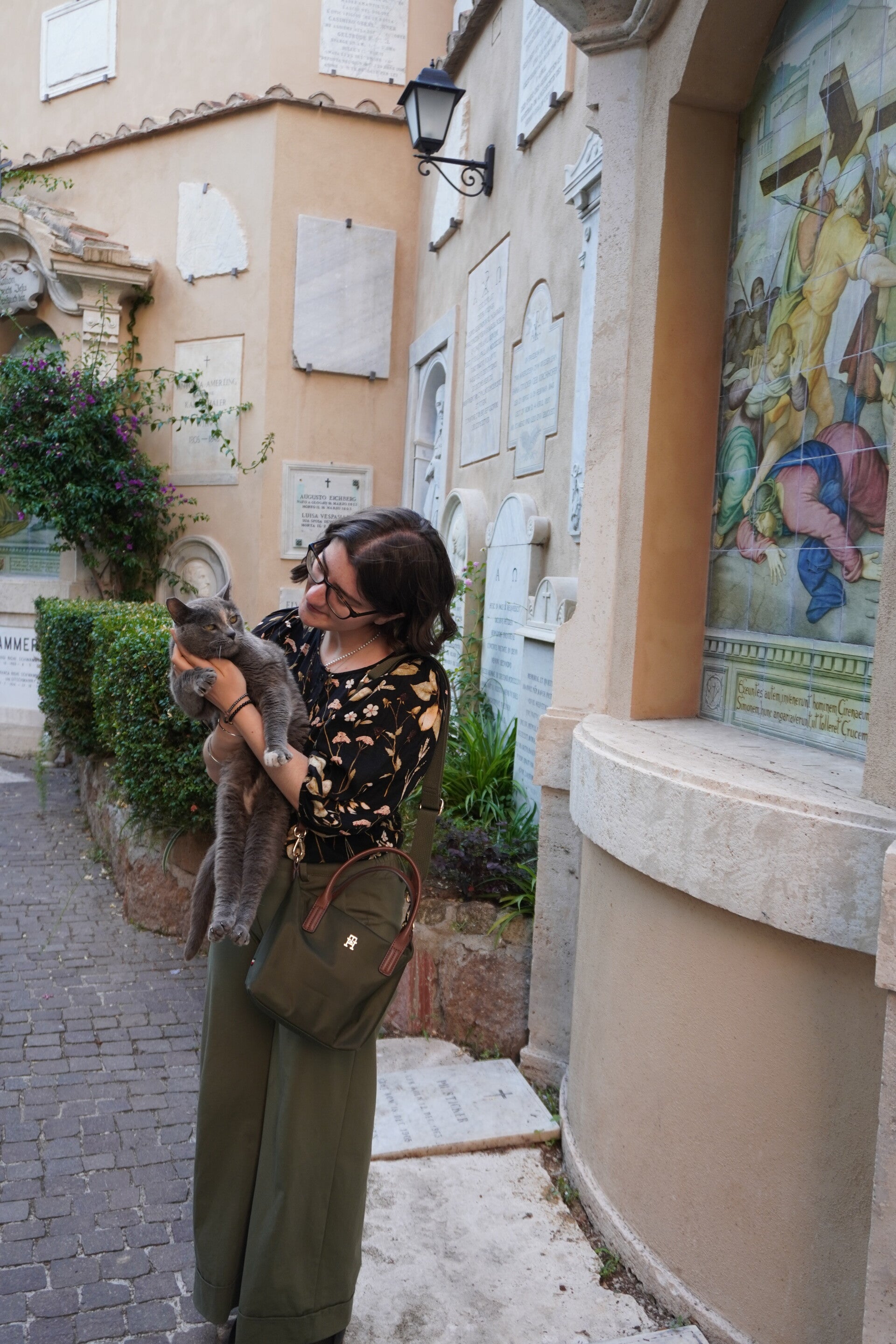
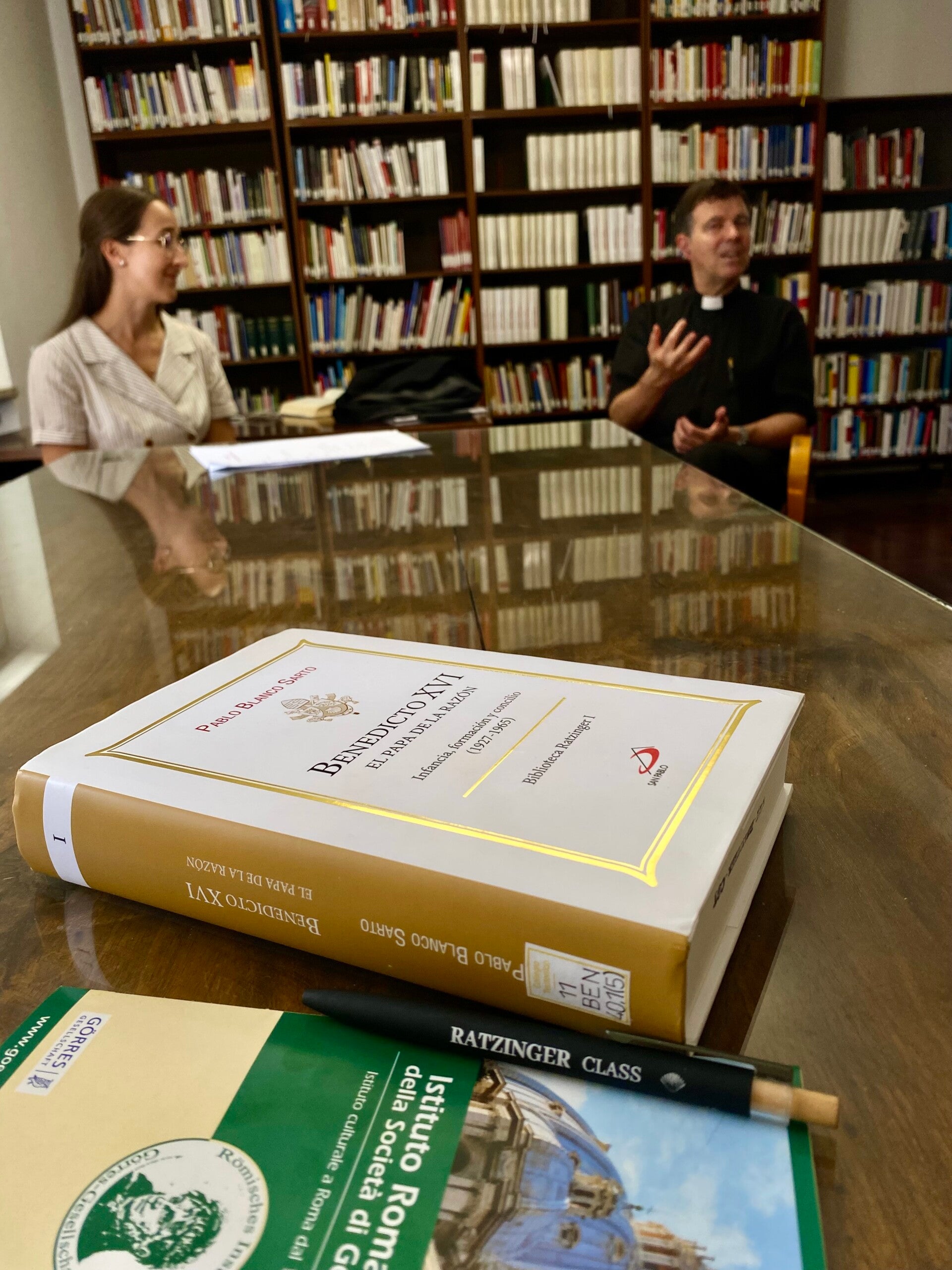
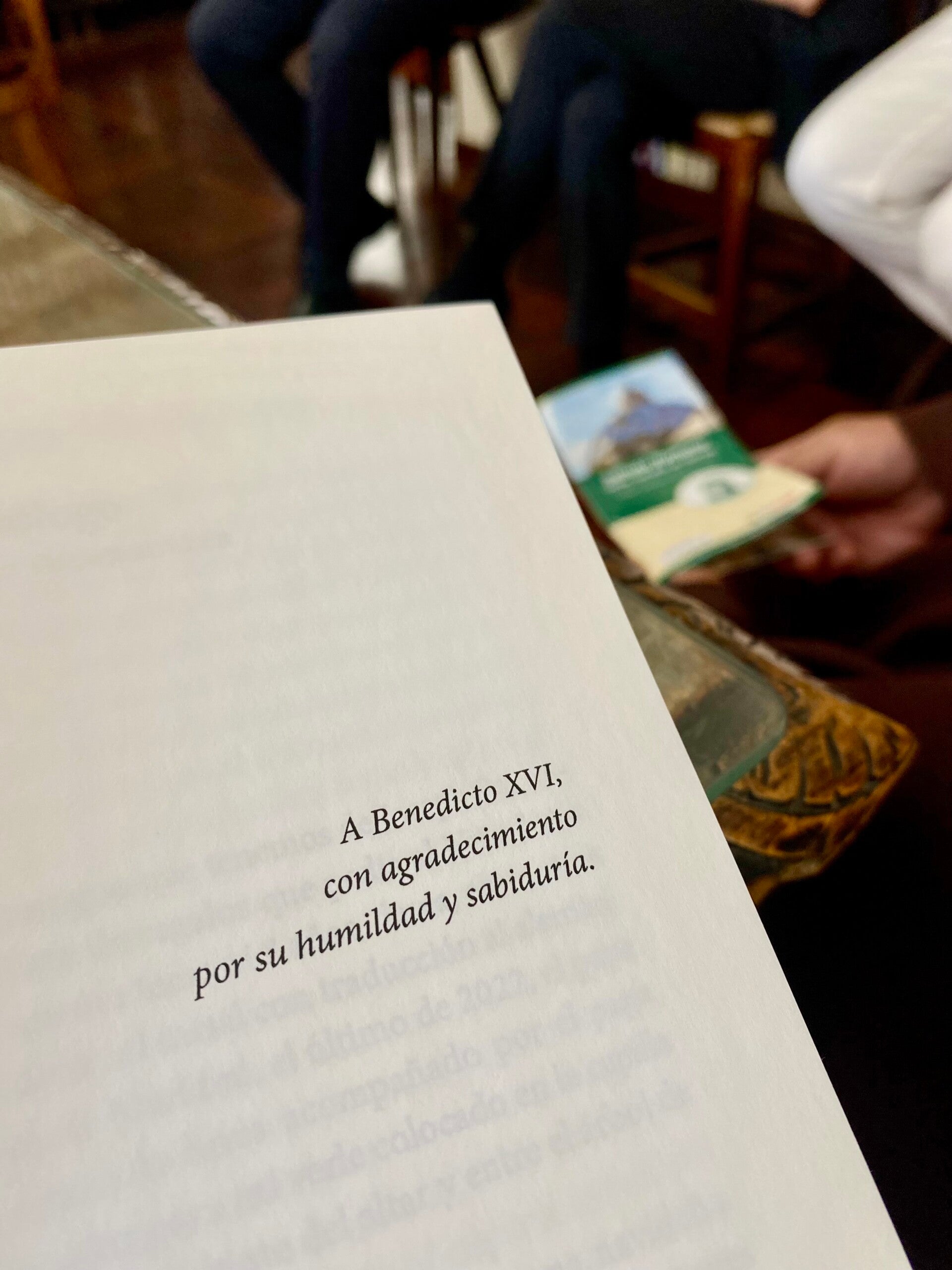
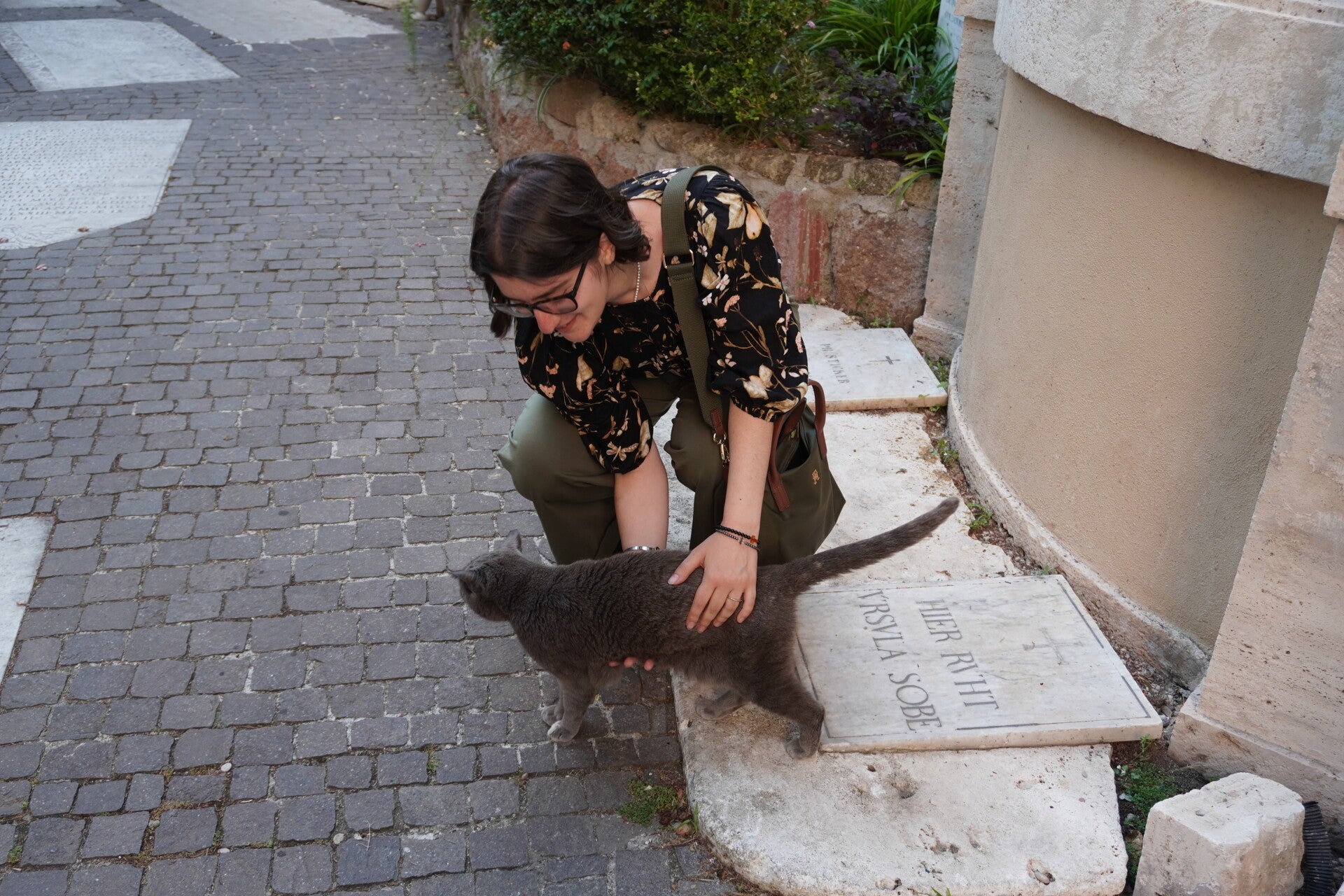
In the last period we met two times the Prof. F. Pablo Blanco Sarto to talk about the life of Joseph Ratzinger - Benedict XVI. Sarto is writing the third volume on the pope theologian. The professor from the University of Navarra (Spain) has guided us in recent weeks through his autobiography "Aus meinem Leben" about which he wrote an article for our website, taken from the recent BuchLab at the Gemeindezentrum of Santa Maria dell'Anima in Rome. The images here are from the "Bucher und Musik" meeting at the Campo Santo Teutonico in the Vatican, on the occasion of Corpis Domini. We held a discussion with the professor at the Ratzinger Library of the German Institute and then partecipate at the concert in the church of Santa Maria della Pietà, a very moving spiritual uplifting performance by the Officium Niederalteich choir.
Professor Sarto is working on the third biographical series of volumes "Benedicto XVI, El papa de la razón". The first book was devoted to “Childhood, Formation and the Council,” the second to “From Tübingen to Rome” – he is currently writing the chapters on the Pontificate and the period as pope emeritus – and this has sparked great interest among students. Over the past month they have been preparing for BuchLab by reading and studying Joseph Ratzinger’s life, starting from his autobiography, which narrates the period from his year of birth, 1927, to his appointment as Archbishop of Munich and Freising in 1977.
Regarding the writing of the new book, Fr. Sarto says that the key concern in front of the manuscript is to avoid simplistic dialectical frameworks that would set the pontiffs against one another, and thus set different ecclesial visions against each other, as well as to lift the entire narrative above journalistic chronicle. It is an aim of communion, but not only that.
«It will not be a hagiography» but «the, in some way supernatural, story of a man of prayer». The material – especially from the years of his Magisterium – is enormous, and the work of identifying the central points can seem a real challenge.
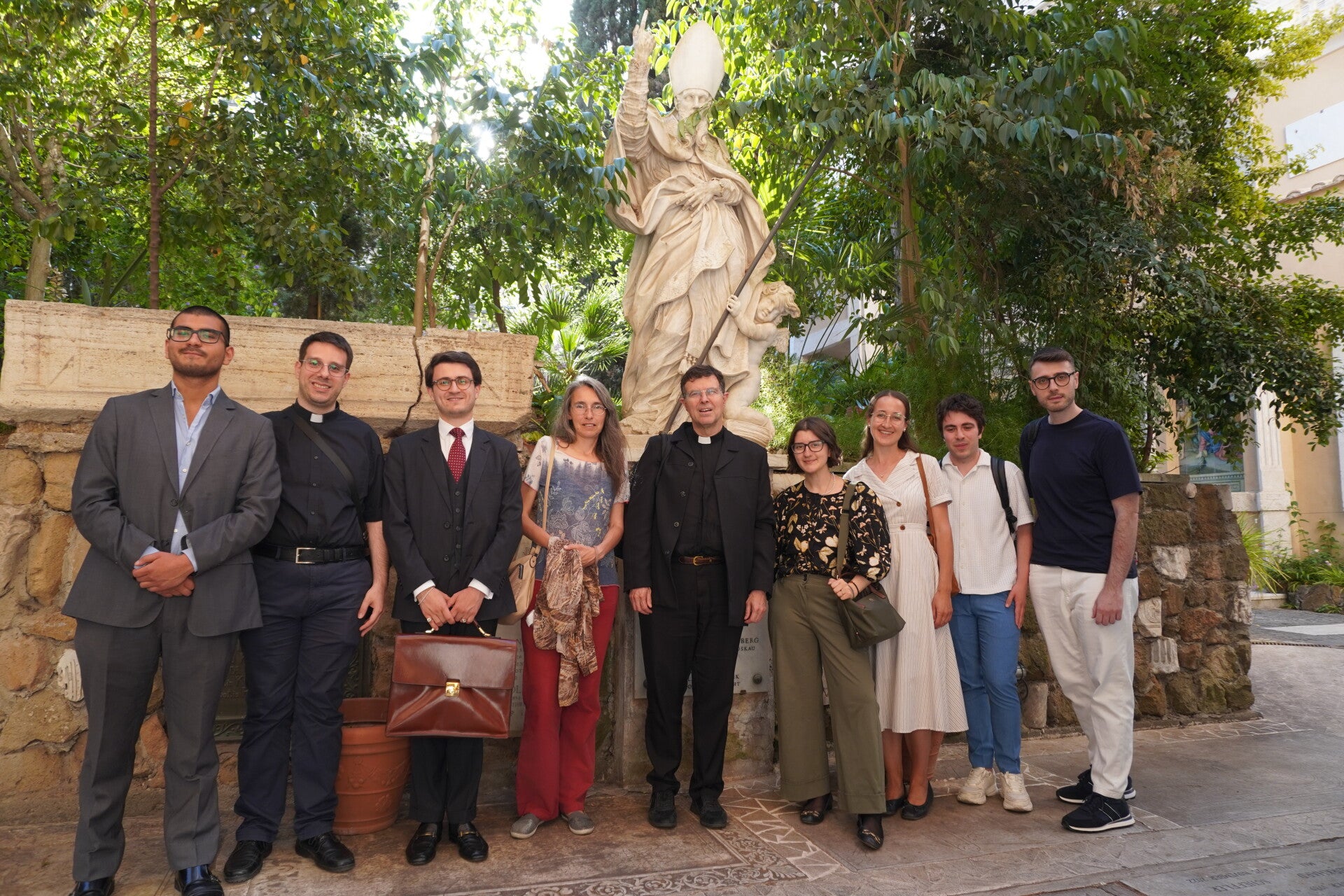
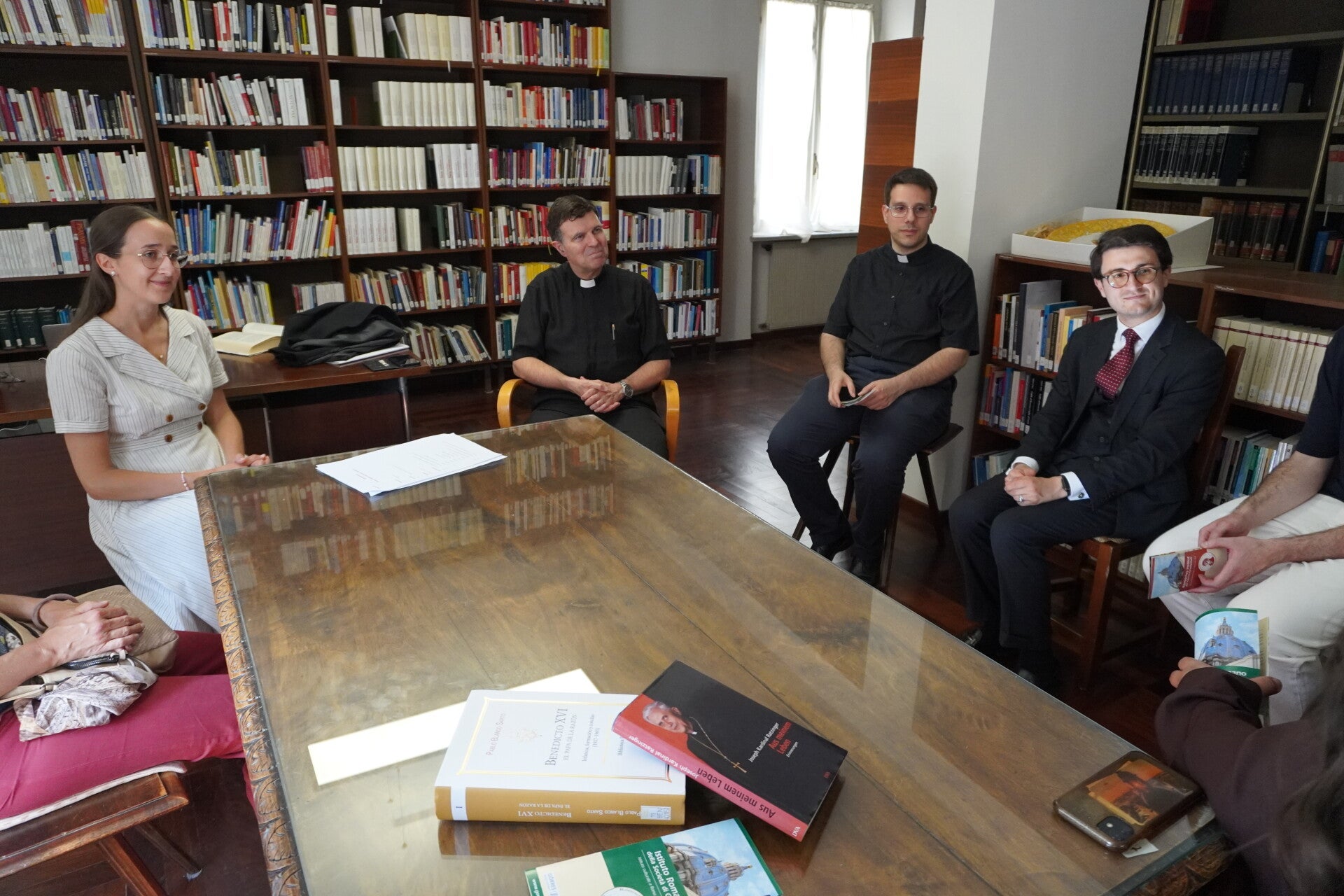
The Professor also explained to the students the genesis of his work: «I began because I defended my doctoral thesis on Ratzinger a month before he became pope. So, right after his election, many people made me ‘the Spanish-language expert', and many of the journalists who had a distorted image of the Prefect of the Congregation for the Doctrine of the Faith came to me to understand who Joseph Ratzinger really was – which, to me, is evident from his texts».
So, having begun writing for the press, following his passion for writing, at a certain point he thought, as a hobby, of writing a biography while he was studying Luther in Germany, whose own suffering and troubled life made Ratzinger’s pages all the more joyful.
«I think like Tertullian: you stop hating when you stop being ignorant», Blanco Sarto quotes, alluding to the relationship between the world of communication and the clichés held by many people who had an unfounded negative perception of Benedict XVI.
Today, however, many young people, he notes, recognize in him «a light, a stance, and a poetic reason», leaving historical prejudices to older generations. From a single sentence, the students agree, «you can develop an entire doctoral thesis».
Fr. Pablo also observed that Ratzinger is perhaps the only one among the great German theologians who did not systematically write a work of dogmatics, and yet the professor, a systematic theologian himself, recognizes in him an organic unity, an inherent connection among all the parts.
The questions focused above all on liturgical aspects, on the Spanish Catholic world, on the journal Communio, and on friendship with de Lubac, von Balthasar, and Barth.
Read after the photos the versions in English and Italian languages.
Aggiungi commento
Commenti