


by Carlo Trejo Dryer
Universidad de Navarra, Pamplona, Spain
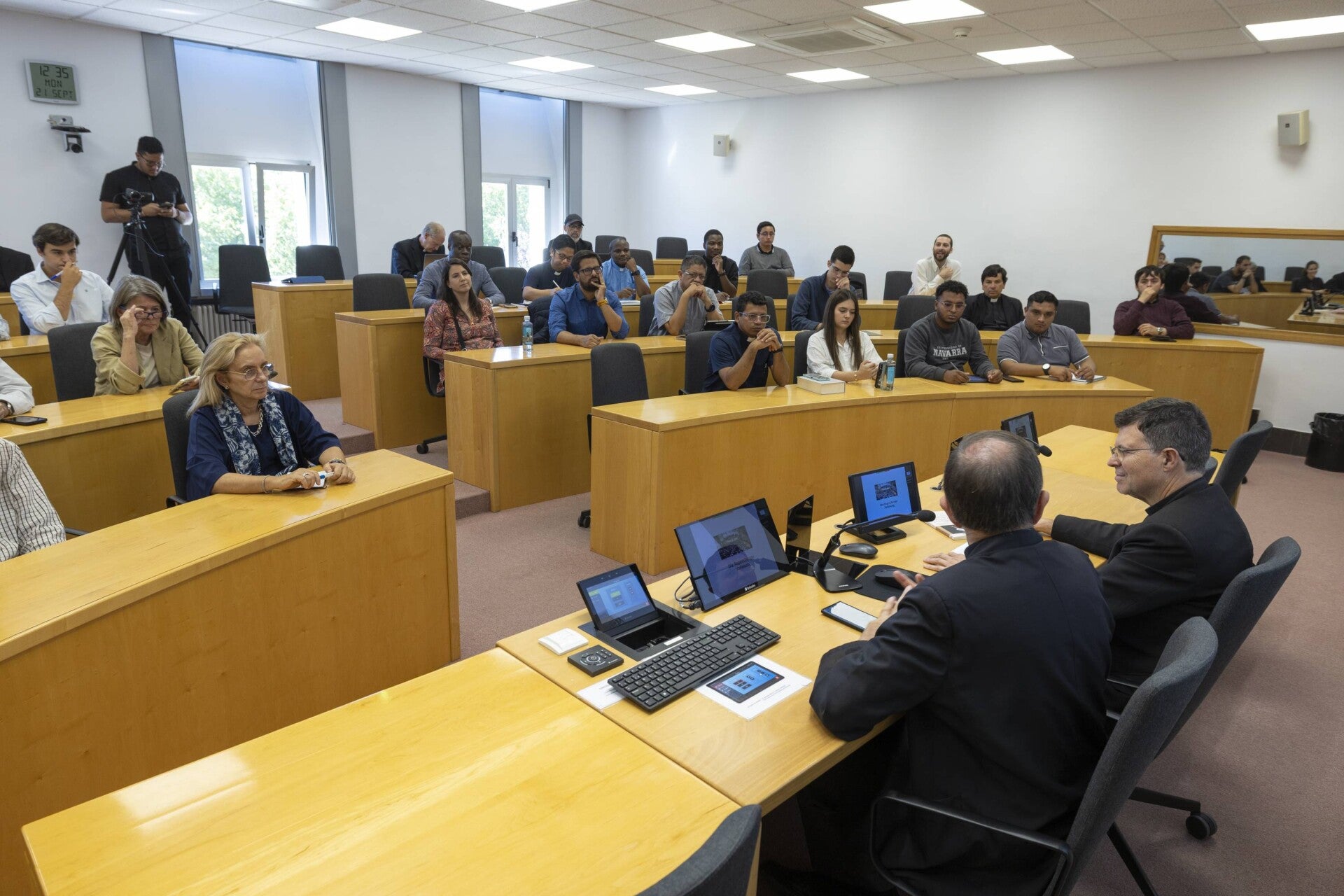
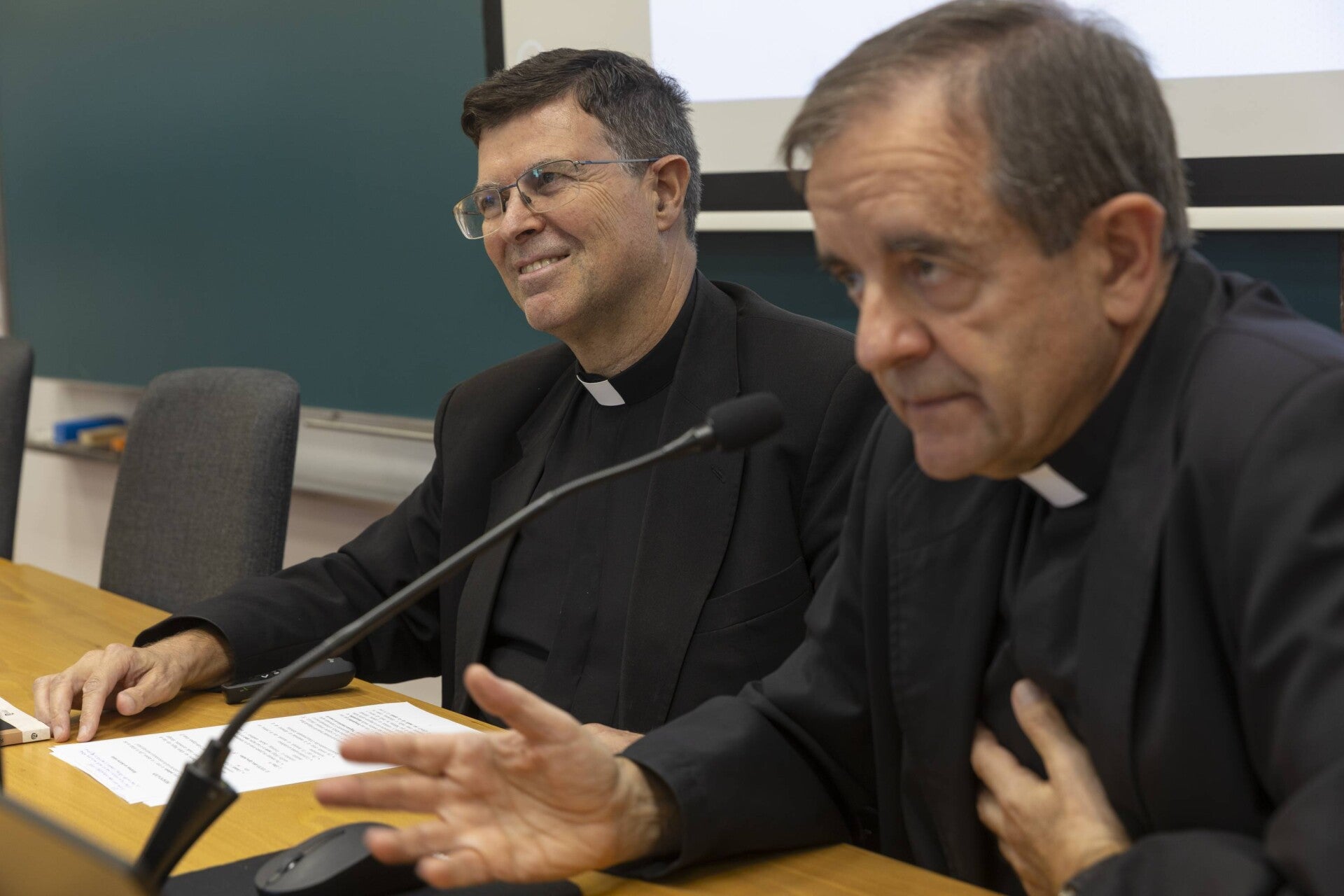
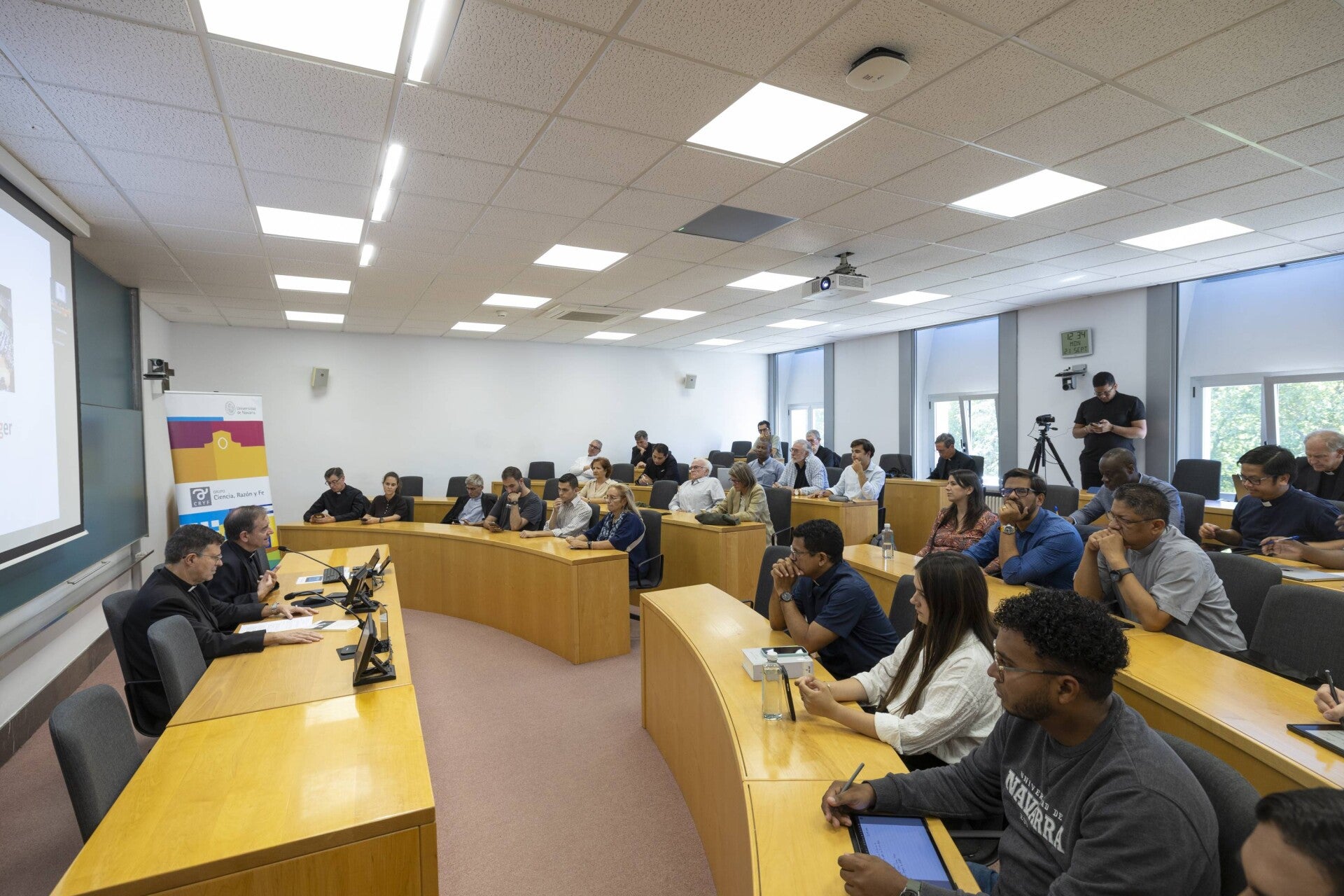
The seminar, delivered by Prof. Dr. Pablo Blanco Sarto of the University of Navarra, revisited Benedict XVI’s famous Regensburg Lecture of 12 September 2006, twenty years after its delivery. The central question was not simply why the speech provoked such controversy, but what its deeper intellectual argument was and why it continues to raise questions about the relationship between faith, reason, modernity, religion, and violence. The seminar approached the subject through the text and context of the lecture, its philosophical and theological background, and its reception in the Christian, Muslim, and wider intellectual worlds.
1. The context of the Regensburg address
The seminar first situated the lecture within Benedict XVI’s visit to Regensburg, a city closely connected with Joseph Ratzinger’s own academic career. The event was originally conceived as an academic lecture, addressed primarily to the university community, rather than as a political intervention. Ratzinger returned to a university where he had previously taught and served as vice-rector, and where Catholic and Protestant intellectual traditions had historically interacted. His visit to Bavaria also had a personal and emotional dimension, as it was a return to his native region.
The lecturer emphasized that the speech should therefore be understood against the background of Ratzinger’s longstanding concern with the relationship between Christian faith and philosophical reason. Its central intellectual problem was broader than Islam: it concerned the nature of reason itself and whether modern Western reason had become too narrow.
2. The controversial quotation and the question of violence
A major part of the seminar examined the passage that caused the international controversy. Benedict XVI quoted the Byzantine emperor Manuel II Palaiologos, who associated Muhammad's teaching with violence and the use of the sword in spreading faith. The lecturer stressed that this quotation was part of a larger argument and that Benedict did not simply present the emperor's statement as his own position. The quotation was preceded and followed by reflections emphasizing that coercion is incompatible with the nature of God and that faith cannot properly be imposed through violence.
For Benedict, the crucial point was that faith addresses a rational human being. Consequently, persuasion should take place through argument, dialogue, and reason rather than through coercion or threats. The formulation highlighted in the seminar was that faith is something to be proposed rather than imposed.
The subsequent controversy demonstrated, however, how differently an academic argument could be received once it entered the global media environment.
3. The logos and Ratzinger’s concept of an “expanded reason”
The intellectual core of the seminar concerned Ratzinger’s understanding of logos. According to the presentation, Ratzinger connects the Greek philosophical concept of logos with the biblical understanding of God's creative Word. The beginning of John's Gospel—“In the beginning was the Logos”—is particularly important: reality is not ultimately the product of chaos or arbitrary chance, but is understood as possessing an intelligible rational structure. Reason, truth, love, and freedom are consequently closely interconnected.
This leads to Ratzinger's distinction between a narrow and an “expanded reason.” Modernity, in his analysis, tends to restrict legitimate knowledge to what can be empirically measured, mathematically expressed, or scientifically verified. Such a conception of reason risks excluding questions of ethics, metaphysics, religion, art, and meaning. Ratzinger therefore calls for a broader conception of rationality capable of engaging the whole of reality rather than only its measurable dimensions.
This argument also explains his insistence that theology has a legitimate place within the university. If reason is defined narrowly as empirical or instrumental reason, theology is reduced to the historical study of religious claims. With an expanded understanding of reason, theology can instead function as a form of intellectually rigorous reflection on faith and as a form of wisdom connected with human existence.
4. Athens, Jerusalem and the critique of “de-Hellenization”
Another major theme was Ratzinger’s account of the relationship between Greek philosophy and biblical revelation. The seminar presented Christianity as emerging through an encounter between the Greek logos and the biblical dabar—between Athens and Jerusalem. Ratzinger identifies several historical moments in which faith and reason entered into dialogue, from the Greek translation of the Hebrew Scriptures through early Christianity and the medieval synthesis, culminating in the modern Enlightenment.
The problem, in his view, is what he calls “de-Hellenization”: the progressive separation of Christian faith from philosophical reason. The seminar traced this issue through Luther, Kant, liberal Protestantism, and modern historical-critical theology. The resulting separation between faith and reason can lead, in Ratzinger's analysis, either to fideism on the one hand or to a reduction of religion to morality, sentiment, or historical description on the other.
The discussion also brought this argument into dialogue with Jürgen Habermas. Both Ratzinger and Habermas, despite their very different intellectual positions, recognize the possibility that both religion and modern reason can develop pathological forms: religion can become fanatical or fundamentalist, while reason itself can become destructive when reduced to purely instrumental rationality. The proposed remedy is therefore not the abolition of either faith or reason, but a critical dialogue between them.
5. From an academic lecture to a global controversy
The seminar then turned to the reception of the speech. Its audience changed radically: what had been addressed to academics in Regensburg was rapidly transformed into a global media event. The controversial quotation was detached from the wider argument and interpreted in political and religious contexts very different from those of the original lecture.
The reaction in parts of the Muslim world was intense. Muslim intellectuals and public figures accused Benedict XVI of misunderstanding Islam or of associating Islam as a whole with violence, while other Muslim voices rejected the interpretation that the speech constituted an attack on Islam.
The seminar particularly stressed this diversity of responses rather than presenting the Muslim reaction as uniform.
At the same time, several Western intellectuals interpreted the speech as raising a fundamental question about the relationship between religion and violence and about the need for rational dialogue between believers and non-believers. Some Muslim thinkers likewise emphasized traditions within Islam that connect faith with wisdom, argument, and philosophical reasoning.
6. From controversy to dialogue
An important part of the seminar was the subsequent development of Christian-Muslim intellectual dialogue. The speaker highlighted the response of Muslim intellectuals who sought to engage the issues raised by Regensburg rather than simply reject the lecture. He referred to the 2007 initiative involving 138 Muslim leaders, the 2008 Catholic-Muslim Forum, and ultimately the 2019 Document on Human Fraternity signed by Pope Francis and the Grand Imam of Al-Azhar. These developments were presented as evidence that the initial controversy eventually contributed to a broader conversation about the common rational and moral ground shared across religious traditions.
7. Questions raised in the discussion
The subsequent discussion complicated the seminar's central argument. Participants questioned whether the Regensburg address implicitly treated the relationship between Islam and reason differently from the Christian relationship between faith and reason, and whether its treatment of Islam risked overlooking the rich philosophical tradition associated with thinkers such as Averroes and Avicenna. The speaker acknowledged that this was a legitimate difficulty and stressed that the problem of religion and violence cannot be restricted to Islam; Christianity and other religions also possess histories in which religious belief has been associated with violence.
A further discussion concerned the differences between the Bible and the Qur'an, particularly their respective conceptions of revelation and the implications for historical-critical interpretation. The speaker was careful to acknowledge his own limitations concerning Islamic theology, while suggesting that Ratzinger's critique was principally directed at Western Christianity and its encounter with Protestantism and modernity.
Conclusion
The seminar ultimately presented Regensburg as a speech whose significance extends beyond the controversy surrounding a single quotation. Its deeper subject is the relationship between faith and reason, and particularly the question of whether modern Western rationality has become too narrow. Ratzinger's proposed “expanded reason” seeks to reconnect scientific and philosophical rationality with questions of truth, ethics, meaning, religion, and human existence.
Twenty years later, the speaker argued, the Regensburg address can therefore be reread not merely as a controversial statement about Islam, but as the starting point of a much broader global conversation about religion, reason, modernity, and peace. The controversy itself exposed the difficulties of communicating philosophical and theological arguments across cultural and religious boundaries, while the dialogue that followed demonstrated the possibility of continuing that conversation through intellectual engagement rather than coercion. The seminar's final emphasis was that the questions opened by Regensburg remain unresolved and therefore continue to merit philosophical, theological, and interreligious discussion.
Aggiungi commento
Commenti