

by Lea Amodio
Religious pluralism, agnosticism, atheism. Who are the "new pagans"? What does the Catholic mission entail? What is grace?
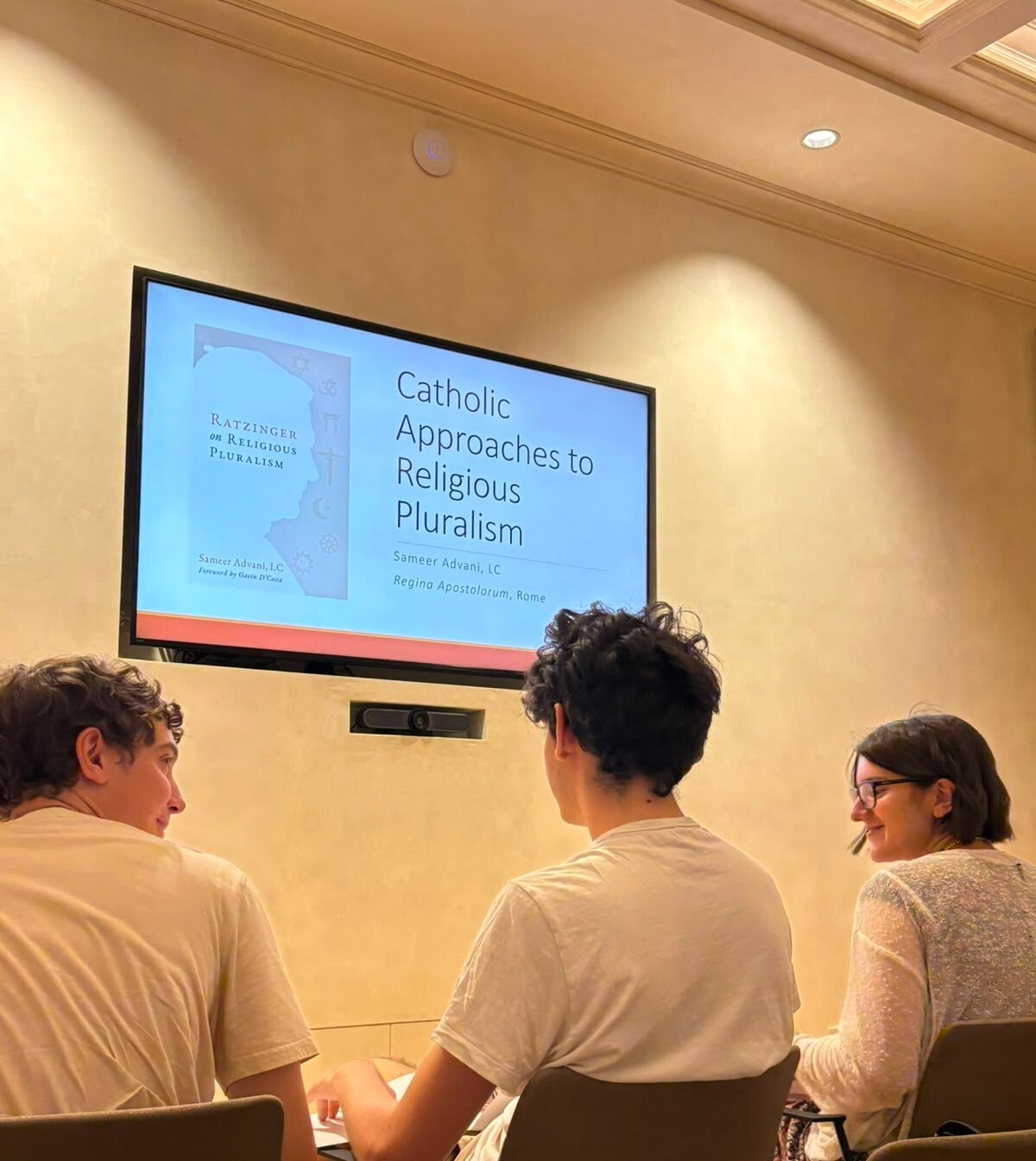
On July 7th, a new session of “BuchLab” was held at the Gemeindezentrum of Santa Maria dell’Anima in Rome.
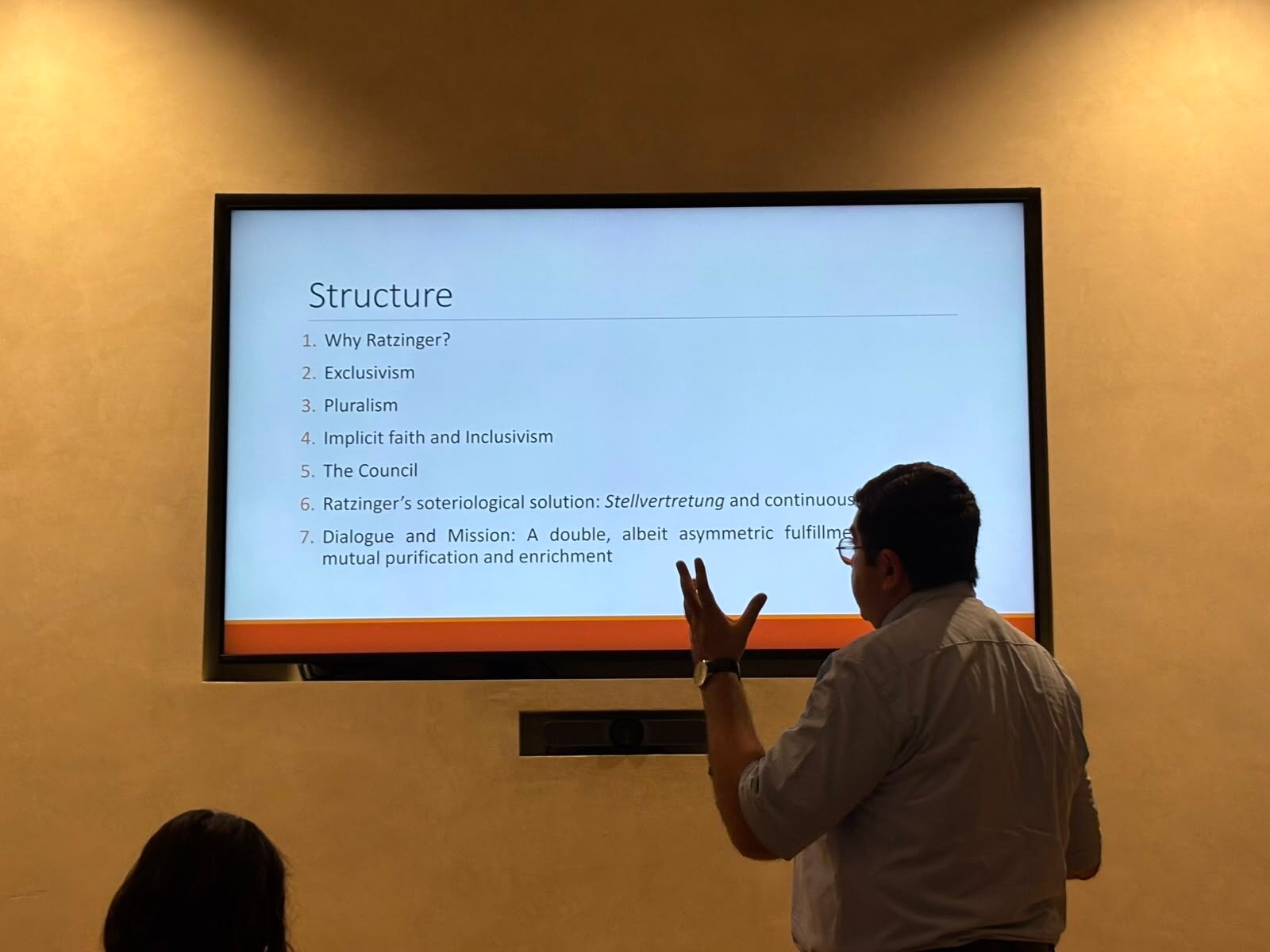
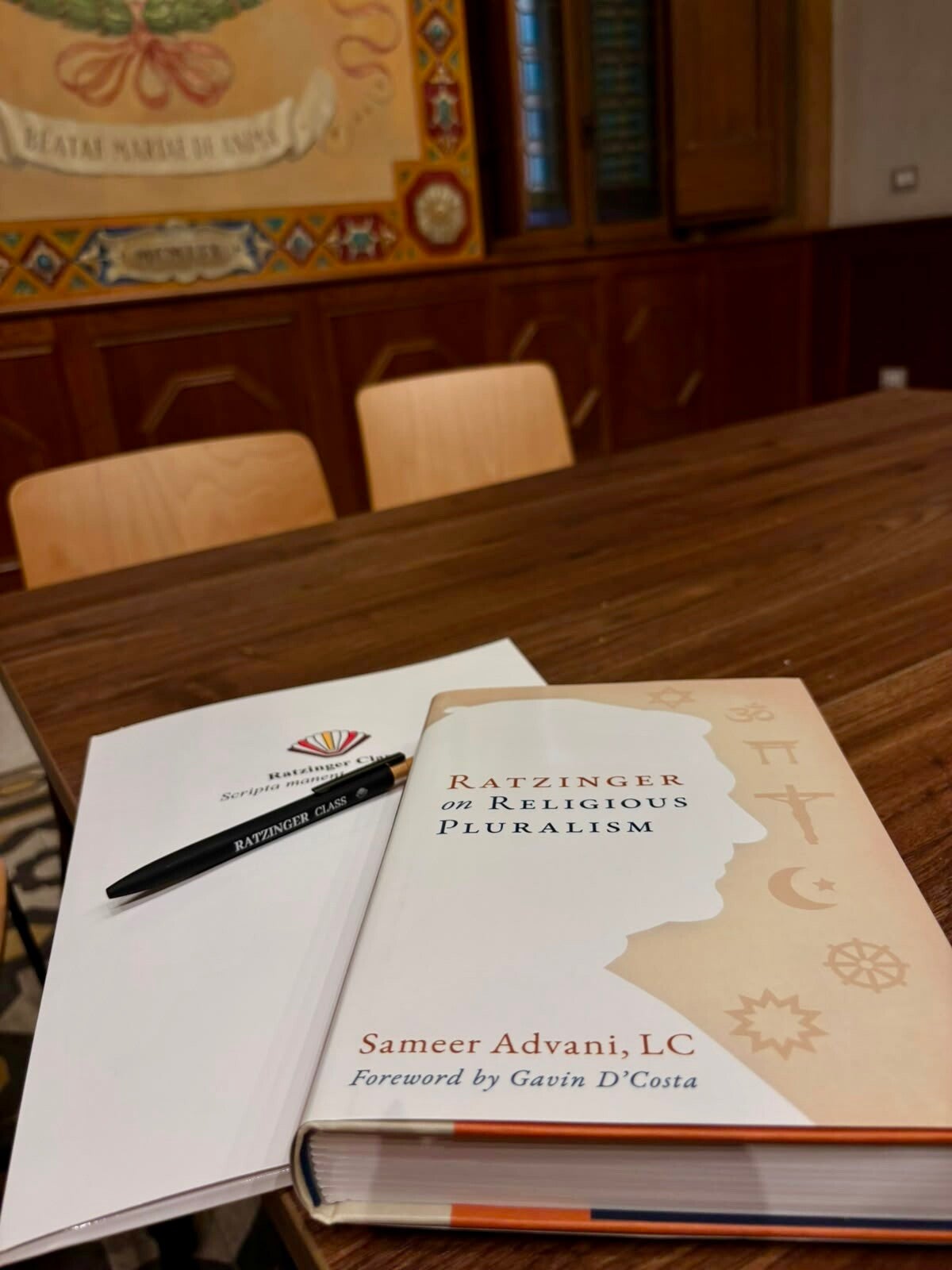
The guest for this episode was Prof. Advani LC, from the Pontifical University Regina Apostolorum in Rome, author of the book "Ratzinger on Religious Pluralism", published by Emmaus Academic and the St. Paul Center for Biblical Theology.
The meeting took as its starting point the reference texts “Die Neuen Heiden und die Kirche” and “Kein Heil außerhalb der Kirche?”
«Mysterium tremendum et fascinans» — this is how Rudolf Otto described, in 1917, the natural stance of man before the Sacred. “Heilig, Heilig, Heilig” — the religious experience that resounds with majesty and awe.
That experience is shared by many. But how do these many live out their witness? Do they live their identity as baptized persons as both gift and responsibility? If grace is bestowed by God, how can we avoid speaking of predestination? We are creatures so wounded — capax Dei — and yet this does not make our individuality sufficient: our Christian faith is expressed and brought to fulfillment in community, in the Church as the vehicle of salvation.
Our mission, understood in its true meaning, consists not only in going out and proclaiming the Gospel through our works, but also in full participation in the Eucharistic celebration itself, where we are for ourselves and for others, in Christ, with Christ, for Christ. The mission to which we are called is therefore inseparably both contemplative and active, and depending on the different dispositions and cultural backgrounds, the popes of the last century have emphasized one aspect or the other.
The Sacraments, in fact, are the Church’s primary offering of salvation to us. In common opinion, evangelization is considered the only form of mission, in opposition to prayer.
Yet these two are reciprocal and complementary.
In the final reflections, some current issues were discussed: many young people postpone essential questions in favor of fleeting, material pleasures, and also out of fear of confronting themselves. Yet what is often lacking is not their sense of searching and of the transcendent, but their ecclesial and Christological sense.
They try to develop the "metaphysical gaze" spoken of by Ratzinger, but stop at the threshold. Others take from the Church’s teaching only what they like. But being “good Christians” does not mean simply being “good people” and behaving accordingly while watering down the reality of sin.
We also discussed the concept of "Christianity" as the cultural foundation of Europe, and the famous idea of the "creative minority" to which Ratzinger referred several times, beginning with a message on Bavarian Radio in 1969 and which he returned to even as Pope. The Church of the future will be made up of a small but authentic flock — a living reality in which numbers do not matter, but rather the universal vocation.
Aggiungi commento
Commenti